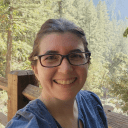
We are thrilled to introduce our newest professors in the MS in Environmental Management (MSEM) program at USF: Professors Charlotte Smith, Preethi Balaji, and Xavier Fernandez. Each brings a wealth of expertise to MSEM, with distinguished backgrounds in GIS (Geographic Information Science), water, remote sensing, environmental science, and water policy.
Prof. Charlotte Smith

Creating inspiration across the globe with her intuitive take on water quality measures, Professor Smith has implemented safer drinking water protocols with her background in GIS, microbiology, and water. Her work extends beyond research and into the classroom, as she has continued to impact collegiate students such as our very own MSEM community this year. Prof. Smith has authored over 50 publications focused on clean water, highlighting the challenges of improving water quality in the public health sector. In one of her most recent research articles focused on the Lack of Safe Drinking Water for Lake Chapala Basin Communities in Mexico, she and her co-authors concluded that the high severity of poor water health around Lake Chapala had led to chronic kidney disease and enteric disease battles, a serious human rights issue.
This spring, Professor Smith is teaching GIS for Public and Environmental Health, where students will learn how to apply geospatial analysis tools like ArcGIS online to study and analyze public health questions. Students will get experience in geospatial data collection, spatial data visualization, disease surveillance mapping, and proximity analysis (e.g., nearest points, drive times, and walk times). Students will also develop their own StoryMap using the ESRI StoryMap Builder.

Prof. Preethi Balaji

Professor Preethi Balaji brings a wealth of experience as a researcher in the field of Remote Sensing. With degrees in Geoinformatics and Geospatial Technologies, Prof. Balaji researches forest and land-use change through advanced tools like Synthetic Aperture Radar and Google Earth Engine. Her Intro to Google Earth Engine spring course at USF brings her expertise to the classroom. In this course, students utilize JavaScript and Google Earth Engine (GEE) readily from their laptops using the cloud-based platform of GEE. The Geospatial Analysis Lab (GsAL) managed by Prof. David Saah and co-author of an open source Google Earth Engine textbook, has become an important space for such innovative learning and research among environmental monitoring systems. Students in this course gain experience in assessing spatially referenced data, applying the theory involved with geospatial technology solutions, and communicating their results.
Professor Balaji’s research journey fostered a deep connection with nature as she grew in her career from her Ph.D. in Synthetic Aperture Radar (SAR) remote sensing to a Remote Sensing Analyst and more recently a Project Lead of a NASA DEVELOP program. For her past research, she has spent time abroad in the forests of Ireland where she monitored forest disturbances and land-use changes to evaluate flood and forest management practices. Read more about the results of this study here, or read Professor Balaji’s Medium post to find out how to spell your name using Landsat images! We tried ours.

Prof. Xavier Fernandez

When it comes to environmental management and water quality assessment, MSEM instructor Professor Xavier Fernandez and ENVS Advisory Board member continues to build upon his 25 years of experience as an environmental scientist by leading the San Francisco Bay Regional Water Quality Control Board’s (Water Board) Planning Division, along with its various programs. Moreover, his involvement in the Climate Action Initiative is critical in preparing regulatory guidance for internal and external stakeholders to permit climate adaptation projects. These roles demonstrate his dedication and leadership in the field.
This semester Prof. Fernandez is teaching the Environmental Risk Assessment course, where students learn how to evaluate risks to public health from exposure to contaminants, to risks in ecosystem functions. Environmental Risk Assessment is one of the first and most critical elements of managing environmental risks through technological interventions or management practices and policies. In Risk Assessment students draw connections between previous courses in the MSEM program like Environmental Chemistry, Environmental Data Analysis, Environmental Engineering, Environmental Toxicology, and/or Environmental Health. These foundational and elective courses prepare our future environmental managers for analyzing risks to human health and ecological systems.