

Date- November 20, 2024
Location: 37°48’17.2″N 122°27’22.4″W 2ft
Site Description: We didn’t see any birds in the parking lot but when we walked closer to the marsh is when we started getting some activity. There was a bridge that allowed us to see the entirety of the marsh from a slightly elevated surface. From this bridge we saw a Greater Yellowlegs along the edge, a few Double-crested Cormorants throughout the sand and in the water, a couple Long-billed Curlews in the shallow water, and a couple Snowy Egrets. As we were walking to the end of the bridge, we saw a Great Blue Heron walking out toward the edge of the marsh. We continued along the marsh loop and saw some Elegant Terns and Least Sandpipers at the edge of a sand bank. Nearby in the water were some Buffleheads and a Red-breasted Merganser. Flying in the air were some Forester’s Terns. We got to the side of the marsh between Crissy field and saw European Starlings, Canada Geese, a Red-tailed Hawk, and some Western Meadowlarks. On our way back on the other side we saw some more of the same shorebirds and a killdeer. We stopped at a small deck toward the ocean and saw a Common Loon. Once we were closer to the parking lot, we saw some Wilson’s Snipes.
Species Account: Bufflehead
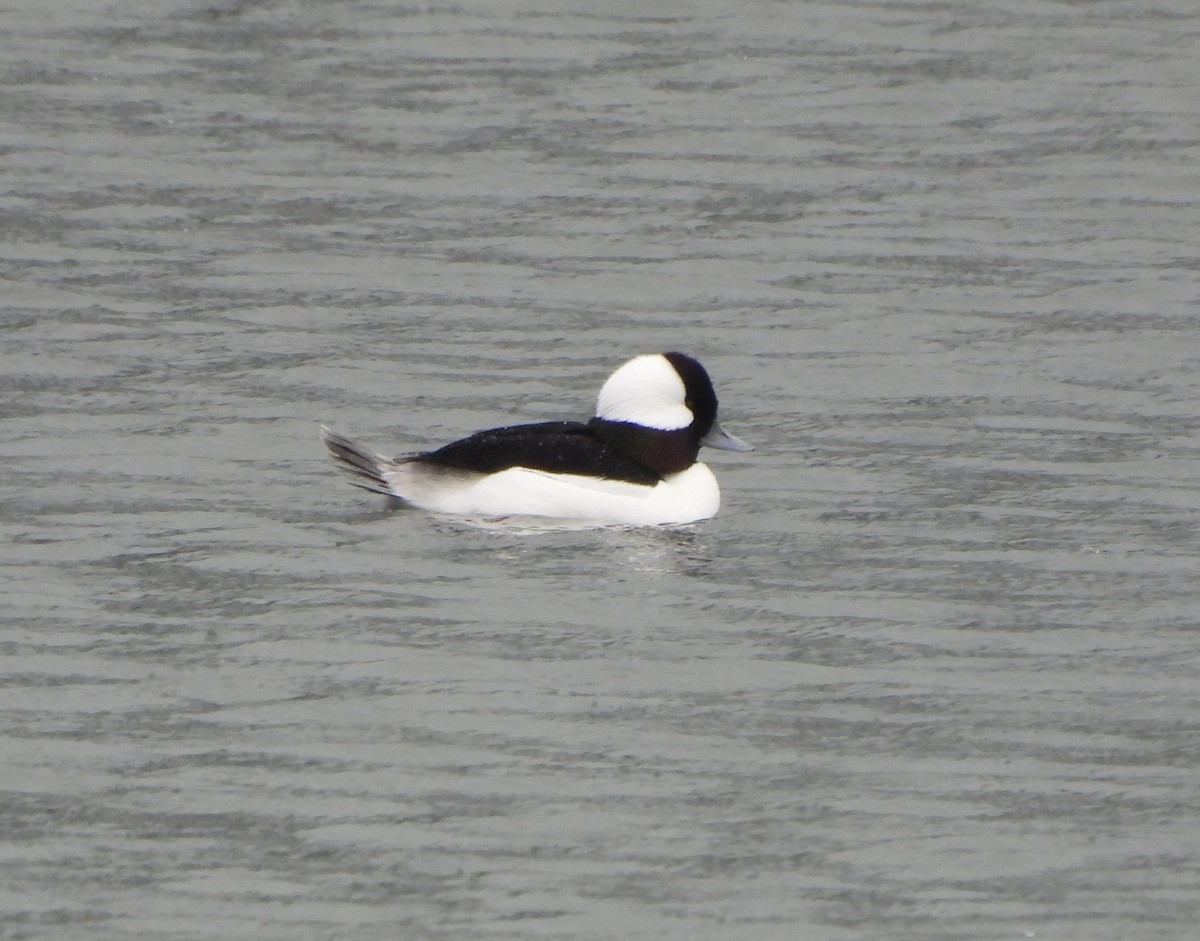
photo from: https://ebird.org/checklist/S203126839
We saw this bird toward the beginning of our trip. It was easily spotted in the water due to the stark colors of its plummage which was in high contrast with the dull colored water. We identified it based not only by the color of its feathers but also by its behavior and environment. Because it was swimming around in the water we were able to rule out any shorebirds since they are not likely to be swimming in the water like this. Both were adults which we could tell from the face pattern. According to the Sibley Guide to Birds Second Edition, these ducks are common and are known to spend their winters in open lakes, harbors, and bays. They are diving ducks because their food source is mollusks, crustaceans, and insect larvae. (Sibley, 37).
Narrative: This was our shortest field trip and our last. We left a little bit later than usual because we ended up changing our site location due to the weather. It was unfortunately raining for the entirety of our trip which made it difficult to properly see the birds through our binos. Regardless, we still saw a decent number of different species.
