

I was close to the Dahlia Garden and was standing along one of the nearby trails. The only sound that was a little suspect was the Band-tailed Pigeon.
I was close to the Dahlia Garden and was standing along one of the nearby trails. The only sound that was a little suspect was the Band-tailed Pigeon.


I walked from my apartment toward the Fuchsia Dell and took a path by the Horseshoe Courts. From there I went back to Hayes St. and walked through some redwoods toward Dahlia Garden.
Link: https://ebird.org/checklist/S201315290


I sat close to the Fuchsia Dell on a path surrounded by tall trees along Hayes St. The only sound that was suspicious was the Golden-crowned Kinglet because it is such a soft call and it is difficult to pick up.


My lab has a park that’s right outside, and on my way back home, I heard a lot of calls, so I decided to stop and do some birding.
Link: https://ebird.org/checklist/S200249349


Date- October 19, 2024
Location: 37°46’19.4″N 122°27’31.9″W 237ft
Site Description: I started my trip at the Fuchsia Dell which is a relatively open space with lots of flower bushes and other shrubs. I saw some Anna’s Hummingbirds and an American Robin. In some nearby pine trees, I saw a couple Steller’s Jays. While I was there I saw 2 Red-tailed Hawks and heard a Red-shouldered Hawk nearby. I processed to walked down a densely covered path surrounded by pine trees where I saw some Song Sparrows. I continued walking until I got to the Lily Pond which was a small body of water with light shrub coverage. Here I saw a Great Blue Heron and some Mallards. I left the pond and took a nearby path that head some dead trees and dry brush which is where I saw 2 Brown Creepers.
Species Account: Brown Creeper
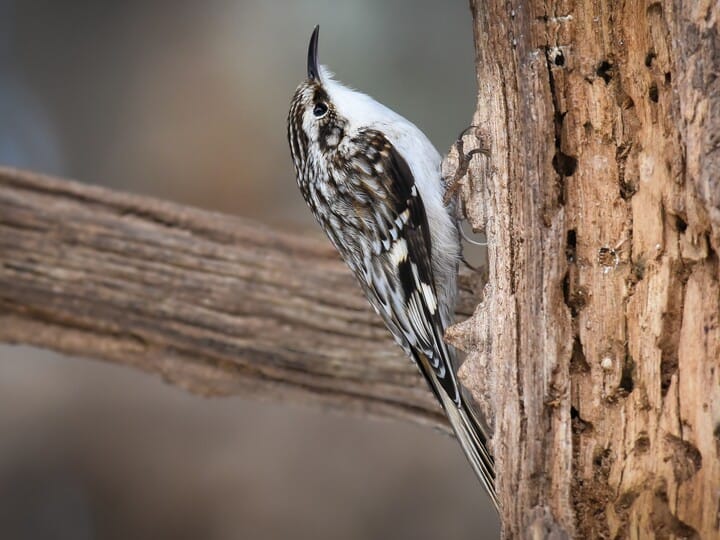
https://www.allaboutbirds.org/guide/Brown_Creeper/photo-gallery
I saw this bird toward the end of my birding trip. It was with another Brown Creeper and they where both climbing up the side of another tree. I was using my Merlin at the time so it was able to pick up on the call. Additionally, I was close enough to see the brown speckled plumage with a white stomach and the thing long beak. According to the Sibley Guide to Birds Second Edition, they feed on insects and spiders found in bark and are uncommon in mature woods specifically, wet areas.
Narrative: I was a little nervous for this at home field trip because I have never been birding for this long by myself. The first hour went by relatively quick but the last hour was a little more difficult to find birds. Golden Gate Park was overall a great place for my first birding trip at this length. I was lucky to go on a nice warm day with clear skies and was able to recognize all of the birds I saw expect for one.


I sat in the garden next to the Sobrato Center on my way to work. None of the sounds that got picked up were suspect, but there were other bird calls that the app didn’t pick up, such as a group of Parakeets that were flying in the distance.


Date- October 9, 2024
Location: 37°55’47.5″N 122°44’08.2″W 269ft
Site Description: The Point Blue site was very shrubby and apparently has become overgrown in recent years to the point where it is now changing the types of birds that are caught. We mainly sat at the building entrance underneath a hummingbird feeder which is why we saw some Anna’s Hummingbirds. Over head in the distance is when we spotted some Turkey Vultures and we saw a Sharp-shinned Hawk flying close to the tree line. The birds caught this day included a Bewick’s Wren, Hutton’s Vireo, and some Wrentits.
Species Account: Hutton’s Vireo
This was the first bird they caught while we were there. We were able to see this bird very up close which is how we could see the thick, hooked bill and muted yellowish color. It also have some white around its eyes and pale edges on its wings. According to the Sibley Guide to Birds Second Edition, there are two populations of these birds that are either found in the Pacific or Mexico. It has a number of different calls and is common in oak woods and mixed-oak conifer forests where it moves through trees. (Sibley, 372).
Narrative: This was a very chill field trip for the class because we didn’t do much birding and mainly listened to the conservation efforts being done at this location. We were able to go on one of their checks when they walk around and look at every net on site to see if a bird was caught. They do this every 30 minutes and the loop was relatively short. The majority of the birds we saw we just flying in the area or were caught.


My roommates and I drove up to Jenner and went birding around a 1 mile Vista Point loop that was a little past Russian Gulch.
Link: https://ebird.org/checklist/S198925168


Date- October 2, 2024
Location: 37°47’16.9″N 122°29’57.5″W 102 ft
Site Description: The beginning of the site had two larger trees that we could look up into and we saw a lot of Chestnut-backed Chickadees and Pygmy Nuthatches. We walked to an open overlook that opened up to the ocean and saw a Black Phoebe and a White-crowned Sparrow. We continued down the Lands End trail the ran alongside the ocean and would stop periodically to look into the dense surrounding brush or peek out the ocean. We saw some Brown Pelicans flying over the ocean and some Bushtits at the top of willow bushes. Farther down the trail we came across a small thing of water where we saw some Townsend Warbler’s bathing. We made our way to Deadman’s point and saw a Peregrine Falcon, Brandt’s Comorants, and a Western Metalmark. We made our way to Mile Rock beach before turning around and walking back.
Species Account: White-crowned Sparrow
We saw this bird a couple of times on the trip but the first time we saw it was at the initial overlook. It was first identified by its call and once it jumped up to the opening of a bush we could clearly see the bright head strips and typically sparrow streaking on the plumage. According to the Sibley Guide to Birds Second Edition, these are very common birds that typically nest in bushes surrounded by open habitats. The pacific population is the most distinctive because of its yellow bill, drabber head pattern, brownish breast sides with short streaks, faint lateral throat stripes, less distinct streaking on the back, and the bend of the yellow wing. Other populations look more similar. (Sibley, 534).
Narrative: We started officially birding around 9 am and left the trail around 12 pm. It was incredibly hot on this day but it made for some amazing views of the bridge because the sky was so clear. We were able to take our class photos on Deadman’s point which was really cool. It was nice seeing a lot of the same species again and Dr. Paul got really excited because we kept hearing a Golden-crowned Kinglet but we never actually saw one.

I walked up from the Education to the back of LME. There were a lot of Chestnut-backed Chickadees which was exciting because I knew there would be other species present.
Link: https://ebird.org/checklist/S198038366